
玻钻之争
Beijing police bust fraud gang that made member undergo 20 CT scans_我的网站

一 |

The case was uncovered in April 2026, when the insurance company detected multiple suspicious claims through its anti-fraud system. The insurer found that more than 10 cases shared unusual similarities: Electric bicycle riders allegedly fell after collisions and suffered tailbone fractures, while the injured parties also came from a similar region.
Police later found that the suspects, led by a man surnamed Zhao, had allegedly formed a professional fraud ring. They chose quiet roads at night or in the evening, used their own vehicles and electric bicycles to stage crashes, or deliberately created accidents to make drivers appear at fault.
Investigators said the gang's key tactic was a "substitution trick" during medical examinations. A member surnamed Qi, who had actually suffered a tailbone injury, was allegedly used as a fake victim after staged crashes and went for CT scans to obtain medical records.
To receive a payment of 1,000 ($150) to 2,000 yuan each time he helped with the "injury verification," Qi allegedly ignored potential radiation risks and underwent more than 20 CT examinations within three months.
Police said the gang carried out more than 20 fraudulent cases between January and April, obtaining over 300,000 yuan ($44,600) in insurance payouts from six companies in Beijing. All 16 suspects have been arrested.
Global Times
。
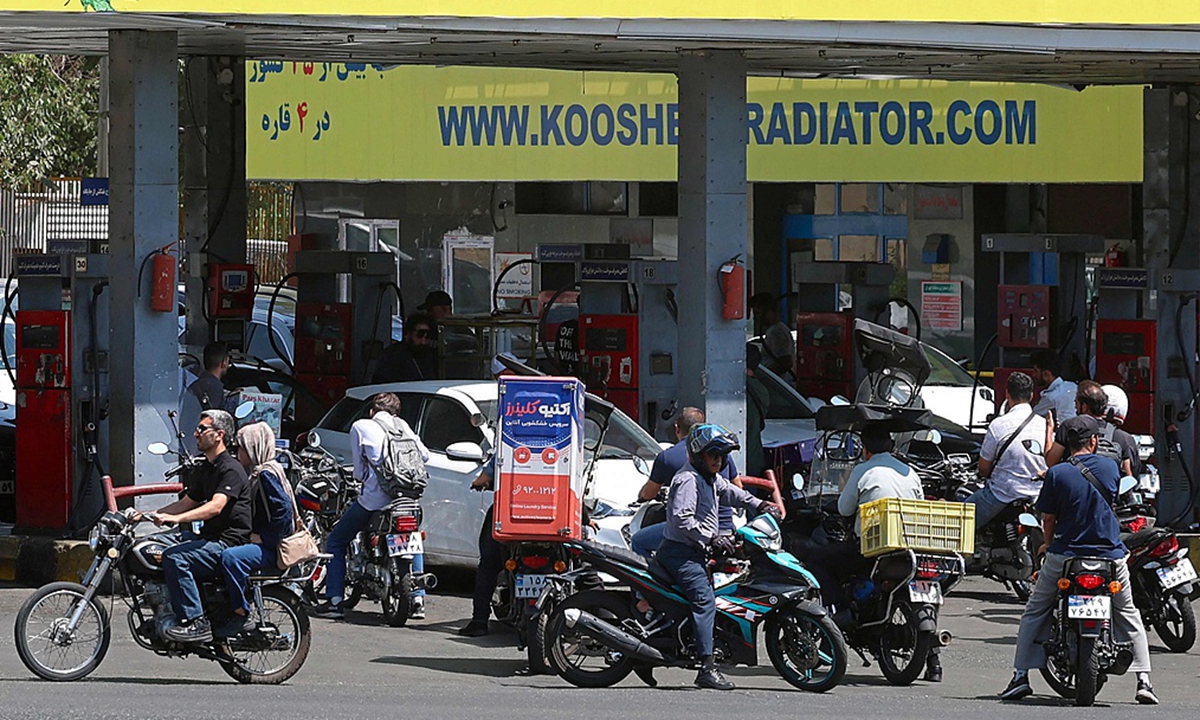
As military strikes and diplomatic negotiations have both failed to bring an early end to the roughly six‑month‑old US-Iran conflict, Washington rolled out new sanctions against Tehran on Monday local time intended to further strangle its economy. Iran, for its part, has vowed a tougher pushback.
In a news conference on Monday, Treasury Secretary Scott Bessent threatened new sanctions on countries refusing to cut economic ties with Iran, following recent rhetoric from Washington threatening an "economic D-Day" for Iran.
Meanwhile, the Office of Foreign Assets Control (OFAC) under the US Treasury announced secondary sanctions on nearly 60 entities, individuals, and vessels in multiple jurisdictions which, according to the US' claims, enable Iran's activities, including so-called nuclear and missile technology procurement, cyber operations, and oil-revenue generation networks.
According to Reuters, those sanctions targeted businesses in China, the UAE, Singapore and several other countries, including a cooking-oil refinery in France, but did not include any of the Chinese financial institutions suspected of facilitating Iran's oil trade.
In response to US Treasury Secretary Scott Bessent laying out plans for economic asphyxiation of Iran, expanding Washington's secondary sanction threats and warning of dire consequences for countries that do not join the campaign, Chinese Foreign Ministry spokesperson Lin Jian said at a press briefing on Tuesday that China has made clear on many occasions its firm opposition to illicit unilateral sanctions that have no basis in international law or the authorization of the UN Security Council.
"Economic warfare and maximum pressure provide no solution. On the contrary, they only serve to fuel tensions and lead to risk spillover, which will disrupt the global economic and financial order, and harm the legitimate rights and interests of other countries," the spokesperson said.
The pressing task is to facilitate the deescalation of the situation and return to dialogue and negotiation as soon as possible, Lin said, adding that China will do everything necessary to firmly safeguard its rights and interests, Lin added. Lin also said China's cooperation with Iran is conducted within the framework of international law, thus should not be disrupted.
When asked whether China has received any such timeline, as the US stated it would give countries a timeline on when to shut down the actions that it has identified, and how China intends to respond to the relevant announcements by the US Treasury involving China-based entities and individuals, Chinese Foreign Ministry spokesperson Lin Jian stated on Tuesday that China is closely following the developments, and will do everything necessary to firmly safeguard our rights and interests.
In May this year, China's Ministry of Commerce issued a blocking ban prohibiting any recognition, enforcement or compliance with US sanctions imposed on five Chinese companies on the grounds of their alleged involvement in Iranian petroleum transactions.
Relying on its financial hegemony and long‑arm jurisdiction, the US enforces unilateral sanctions with no basis in international law. Such measures severely undermine fundamental consensus for international trade and erode the existing international order, Zhou Mi, senior research fellow at the Chinese Academy of International Trade and Economic Cooperation, told the Global Times on Tuesday.
In essence, Washington is imposing its Iran‑focused policies to enterprises across the globe, compelling third‑party actors to fall in line with its diplomatic objectives, Zhou noted.
The latest sanctions would affect a broader range of countries, industries and firms. They will not only draw wider opposition from the international community, but also boomerang on the interests of US‑owned enterprises, he added.
Fewer levers left
"We are launching an economic onslaught against Iran's financial connections around the globe," Bessent claimed at a press conference. "Our objective is to sever every economic lifeline" that sustains the country, he said, according to a Treasury release.
The US Treasury Department said in a release that the new sectoral sanctions determinations target five critical sectors - digital assets, technology, gold, aviation and shipping - that the US claimed Iran has relied on to support its economy.
US Treasury claimed that "any entity that facilitates money laundering or sanctions evasion on behalf of Iran risks being cut off from the US financial system."
OFAC also suspended several general licenses that previously authorized certain remittance payments to Iran and Iranian access to the US cultural and academic system. The office also issued additional guidance on the so-called sanctions risks of bowing to Iranian demands related to shipping in the Strait of Hormuz.
Mohammad Mokhber, an aide to Supreme Leader Mojtaba Khamenei, said in an X post on Monday that Iran's response to US sanctions and pressure will be "more decisive than before."
Iranian Economy Minister Ali Madanizadeh said that Tehran "is and was ready," with a two-year plan to counter Washington's new sanctions. He told state television that "it seems they wished to suffer yet another defeat," per an AFP report.
Iranian Parliament Speaker Mohammad Bagher Ghalibaf responded in an X post that "the Americans know no one will believe their nonsense," noting that the US is not in a position economically to restrict its relations with other countries.
Alan Eyre, a distinguished diplomatic fellow at the Middle East Institute, told NBC News that after six months of combat, the US government "has few remaining levers it can use to convince Iran's major trading partners to materially reduce their economic ties."
While Washington's maximum‑pressure campaign may deliver short‑term shocks to Iran's economy, it can hardly "strangle" the country completely, said Liu Zhongmin, a professor at the Middle East Studies Institute of Shanghai International Studies University.
He added that Iran's economic resilience cannot be underestimated. Having borne decades of crippling sanctions from the US and Western nations, Tehran has built substantial experience in sanction‑busting and developed coping mechanisms ranging from basic‑industry self‑reliance and regional trade networks to oil‑for‑goods swaps and non‑US dollar‑denominated trade. Furthermore, the Strait of Hormuz remains a source of strategic leverage for Iran to push back against US pressure.
The expert said that Tehran and Washington are encountering "a battle of wills," and Iran believes the economic costs the US would suffer from a Hormuz blockade would outweigh the damage inflicted on Iran by sanctions.
Washington's "economic strangulation" policy risks ending in failure unless it yields short‑term outcomes, particularly securing the opening of the Strait of Hormuz, Liu added.
Self-created dilemma
As the US ramps up pressure on Iran, Americans are growing averse to a protracted war.
According to a Reuters/Ipsos poll that closed on Monday, US public approval of the war with Iran fell to its lowest level since the conflict's early days, with just 31 percent of Americans supporting US military action.
On June 18, the US and Iran signed an MoU, under which the two were scheduled to hold negotiations within a period of 60 days, which ended on August 17, to reach a final agreement. However, the talks' fate remains unclear following renewed escalation between the two countries.
Iranian political analyst Mostafa Khoshcheschm told Al Jazeera that the new US sanctions intended to create an "economic onslaught" were a "political show" of intimidation.
Liu said that by resorting to an "economic strangulation" tactic after miring itself in a fruitless military quagmire over Iran, the US has laid bare its practical predicament and strategic dilemma, and seemingly running out of cards.
Citing sources, CNN reported earlier this month that the US military has exhausted nearly 80 percent of its interceptors for a key missile defense system as senior US military commanders are warning that the Pentagon's munitions stockpile is "dangerously low."
Faced with depleted ammunition stockpiles and insufficient military‑industrial capacity, and amid growing domestic criticism of its Middle East policy, the White House has opted for tough economic measures against Iran, Liu said. "Less costly than military coercion, such moves help Washington strike a tough posture before voters and shun political risks from further military escalation," said the expert.
There is, however, an increasingly obvious paradox in Washington's economic warfare against Iran: the tighter the sanctions, the tighter global energy supplies become, and the higher costs borne by American consumers and businesses, the expert added.
。

二 |
Current article:http://iej.panningbuquanchencaibingzhang.cyou/list_lnj77/5zed.html
Published on:15:35:13
 26名Meta员工指控扎克伯格借助AI精准裁员8000人
 广西广木资产联合你我贷客服敷衍拖延安抚金未到账
 应对台风“紫檀”“沙德尔” 多地加强防御
 近郊短途自驾出游,山水营地,露营烧烤轻松安排妥当轻松惬意
 华盛顿:乌克兰局势非常可怕!
 瑞恩·赫斯特因伤退出,戴夫·巴蒂斯塔正式官宣出演 战神:诸神黄昏 剧集奎托斯一角。
我的网站最新内容
- ·NBA季后赛首轮G1盘点:仅湖人和火箭开门黑丢掉主场优势
- ·中钢洛耐:2026年半年度净利润约-8564万元
- ·快手成功上岸
- ·刘强东父亲火了!全村60岁以上老人在领红包,他在拆纸箱卖废品
- ·China's KSG beats fellow team AG.AL to win Honor of Kings World Cup
- ·6799元 全新米家空调巨省电立式5匹预售:商居两用 适配80平大房间
- ·尽情去嗨,即刻出发!体彩顶呱刮申城上新
- ·最有温度的NBA球星中国行!巴特勒携手李宁走进大凉山
- ·【“十五五”开局看河北】我省新能源货运发展规模稳居全国前列
- ·刘翔发文向网友征求意见:上海市体育局让我买断或当教练上班,我该怎么办
- ·Video: स्कूटी पर जा रही थी लड़कियां, बाइक सवार लड़कों ने कर दी ऐसे हरकत; फिर लग गई क्लास
- ·中金:超级电容渗透率提升,迎来供给紧缺周期
- ·人民币兑美元中间价报6.7852,下调11点
- ·China's defense ministry vows firm countermeasures against Philippine provocations over Huangyan Dao
- ·Alia Bhatt reflects on her decade-long career at the Red Sea Film Festival
- ·吉林男篮与琼斯完成续约
我的网站热点内容
- ·ब्लड शुगर लेवल कंट्रोल करने के लिए जरूरी है मैग्नीशियम, इन तरीकों से करें डाइट में शामिल
- ·吉南辽北蒙东六市深化合作高质量协同发展第三届会议在抚顺市召开
- ·三级政协联动 建好“辽事好商量,聊事为人民”协商平台
- ·「ぽっぽぽぽ」鼠先輩、最盛期は月1200万円 自宅「7000万~8000万円」&印税も告白
- ·主流之外,长出了一个5000亿美元估值的隐形巨兽
- ·2026年8月小米SU7高速正常行驶普利司通轮胎侧面无接触爆胎
- ·海天味业:上半年净利润41.9亿元,同比增长7.13%
- ·大基金减持,科技抱团面临拐点?
- ·逛西湖这么多年,真没发现这个“彩蛋”
- ·BPSC Bharti 2025: बिहार AEDO के बंपर पदों पर आवेदन स्टार्ट, फीस, पात्रता सहित पूरी डिटेल यहां करें चेक
- ·兴城市召开“两优一先”表彰大会
- ·马斯克计划明年发射AI卫星!相关概念股梳理
- ·E China's Qingdao explores smarter ways to improve delivery safety
- ·物流装备业加速崛起
- ·多地有雷阵雨或阵雨,局地有暴雨,最高温36℃,河北最新出行信息请查收→
- ·Enter 'The Music Man': Trump Reportedly Played Song From 'Cats' to Keep Calm During Presidency